
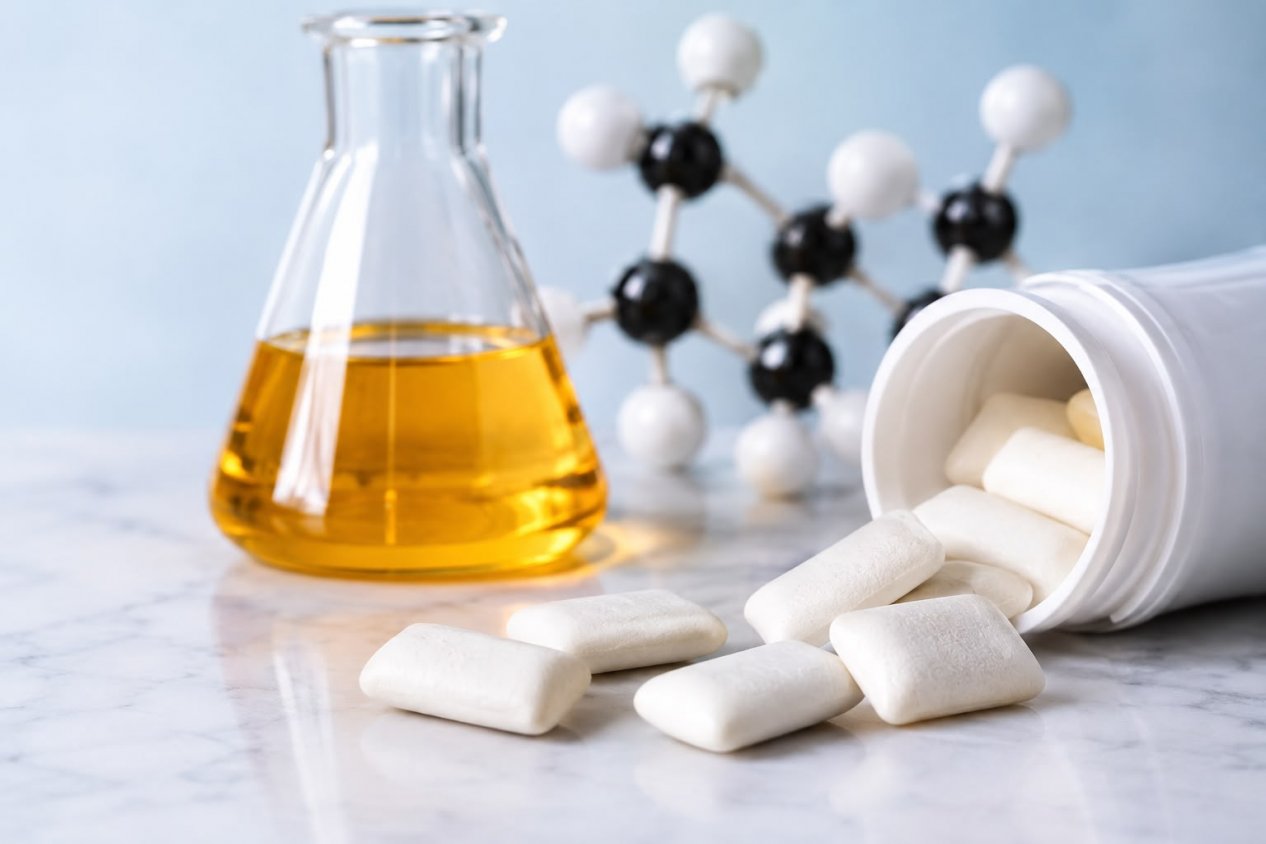
Chewing gum has long been part of everyday life. We buy it to freshen our breath, get rid of an unpleasant taste after a meal, or simply keep ourselves occupied while travelling. However, claims periodically appear online that chewing gum contains petroleum products and may therefore be harmful to our health.
There is some truth to these claims. Certain ingredients in gum base are indeed derived from petrochemical feedstocks. But to assess the potential risks, it is important to understand the product’s composition and distinguish the origin of its ingredients from their toxicity.
Most chewing gums contain a gum base, sweeteners, flavourings and substances that help maintain softness and elasticity. The gum base is the insoluble part of the product that allows it to retain its shape even after the sweetness and flavour have disappeared. Its production may involve natural materials, such as plant resins and latex, as well as synthetic polymers, including polyvinyl acetate, polyethylene and polyisobutylene. Some formulations also contain paraffin and petroleum-derived waxes.
Petroleum is used as a raw material to produce many chemical compounds found in industrial, medical and everyday consumer products. However, the claim that chewing gum is literally made of petroleum is inaccurate: crude oil is not added to the finished product. Instead, specific substances are obtained through industrial processing.
Manufacturers generally list the ingredient under the broad term “gum base” on packaging without disclosing its complete composition. As a result, consumers cannot always determine which specific polymers are used in a particular brand.
The petrochemical origin of an ingredient does not, by itself, prove that it is toxic. Safety depends on the substance’s chemical properties, purity, quantity and conditions of use. For example, regulations issued by the US Food and Drug Administration (FDA) specify which substances may be used in chewing gum bases and establish requirements for their use.
There is currently insufficient scientific evidence to claim that ordinary consumption of permitted chewing gum causes petroleum poisoning. However, this does not mean that gum can be consumed without limits. Potential risks are primarily associated with sugar, sweeteners and prolonged chewing.
For children, age and the ability to chew safely are particularly important. Young children may accidentally inhale gum or choke on it, so it should only be given to children who understand that it must not be swallowed.
Accidentally swallowing a single piece of gum is usually harmless. Although it is not fully digested, it generally passes through the digestive tract and is eliminated naturally. However, repeatedly swallowing gum or consuming large quantities can, in rare cases, lead to the formation of a mass in the intestines and even intestinal obstruction.
The type of sweetener also matters. Sugared chewing gum promotes acid production by bacteria in dental plaque, increasing the risk of tooth decay. Sugar-free varieties are therefore preferable for children who are old enough to chew gum safely. However, sugar substitutes such as sorbitol and maltitol can cause bloating, discomfort and diarrhoea when consumed in excessive amounts.
In adults, prolonged and intensive chewing places additional strain on the jaw muscles and temporomandibular joints. For people prone to problems in this area, it may worsen jaw pain, trigger headaches and cause discomfort when opening the mouth. Large amounts of sugar alcohols may also lead to increased gas production and loose stools.
At the same time, sugar-free chewing gum can benefit dental health. Chewing stimulates saliva production, which helps neutralise acids formed after eating and protects tooth enamel. The American Dental Association notes that sugar-free gum can be an additional tool in preventing tooth decay, but it does not replace brushing with fluoride toothpaste or other oral hygiene practices.
There is no need to give up chewing gum solely because some of its ingredients are derived from petrochemical feedstocks. A more sensible approach is to check the product’s ingredients, choose sugar-free varieties, avoid excessive chewing and follow age-related safety recommendations. If jaw pain or digestive discomfort develops, chewing gum should be discontinued.
In conclusion, the claim that some chewing gum ingredients are manufactured from petrochemical feedstocks is true. However, the idea that gum literally contains crude oil or inevitably poisons the body is an exaggeration. The main established risks are associated with sugar, excessive consumption of sugar substitutes, strain on the jaw joints and the choking hazard for young children. When permitted chewing gum is consumed in moderation and age-related recommendations are followed, there is no reason for alarm.